




Audio alter means changing or editing audio to improve sound quality, remove noise, adjust volume, or add effects. This guide explains simple, practical ways to alter audio for beginners, including basic editing, noise reduction, voice enhancement, and online tools, so you can create clear, professional audio for videos, podcasts, and voice recordings.
Life today is full of audio content.
From YouTube videos to podcasts and short reels, sound quality matters more than ever.
However, many creators record audio in noisy rooms or with basic microphones.
As a result, their message sounds unclear and unprofessional.
Audio alter is the simplest way to fix this problem.
Moreover, you do not need expensive software to get started.
This guide explains how to alter audio in a clear, beginner-friendly way.
In addition, you will learn practical methods that actually work in 2026.
What Does Audio Alter Mean?
Audio alter means editing or changing an audio file to improve how it sounds.
For example, you can remove background noise, increase volume, change speed, or add effects.
Instead of sharing raw recordings, creators alter audio to make it clean and pleasant to hear.
Therefore, audio alteration is a basic skill for anyone working with sound.
Common Ways to Alter Audio
- Remove background noise
- Improve voice clarity
- Adjust volume levels
- Change pitch or speed
- Add music or effects
Each method serves a different purpose.
Consequently, choosing the right technique depends on your goal.
Why Audio Alter Is Important
Good audio builds trust.
On the other hand, poor audio pushes people away.
When your sound is clear:
- People listen longer
- Your content feels professional
- Your message becomes easier to understand
Moreover, platforms like YouTube and podcasts reward better engagement.
As a result, clean audio indirectly supports growth and reach.
1. Basic Audio Editing (For Beginners)
Basic editing is the first step in audio alteration.
For example, you can cut mistakes and remove long silences.
How It Works
- Import your audio file
- Trim unwanted parts
- Normalize volume
- Export the final file
Best For
- Beginners
- Simple voice recordings
- Short videos
Because this method is simple, it builds confidence quickly.
2. Noise Reduction (Remove Background Sounds)
Noise reduction removes unwanted sounds like fan noise, traffic, or hiss.
However, using too much noise reduction can damage voice quality.
How It Works
- Select background noise
- Apply noise reduction
- Adjust intensity carefully
Best For
- Home recordings
- Podcasts
- Online meetings
As a result, your voice sounds cleaner and more professional.
3. Voice Enhancement (Make Voice Clearer)
Voice enhancement improves clarity and presence.
For instance, you can boost mid frequencies and reduce harsh tones.
How It Works
- Use equalizer (EQ)
- Add light compression
- Improve clarity
Best For
- YouTube videos
- Voiceovers
- Reels and shorts
Therefore, even basic microphones can sound better with proper enhancement.
4. Adjust Speed and Pitch
Sometimes audio feels too slow or too fast.
In that case, adjusting speed and pitch helps.
How It Works
- Increase or decrease speed
- Slightly adjust pitch if needed
Best For
- Audiobooks
- Tutorials
- Language practice
Moreover, this keeps listeners engaged.
5. Add Background Music and Effects
Background music adds emotion and energy.
However, it should never overpower the voice.
How It Works
- Add soft music
- Lower music volume
- Fade in and fade out
Best For
- YouTube intros
- Podcasts
- Storytelling content
As a result, your content feels more polished.
6. Online Tools for Audio Alter (No Software Needed)
You do not always need heavy software.
Instead, online tools can handle basic audio alteration.
Popular Online Tools
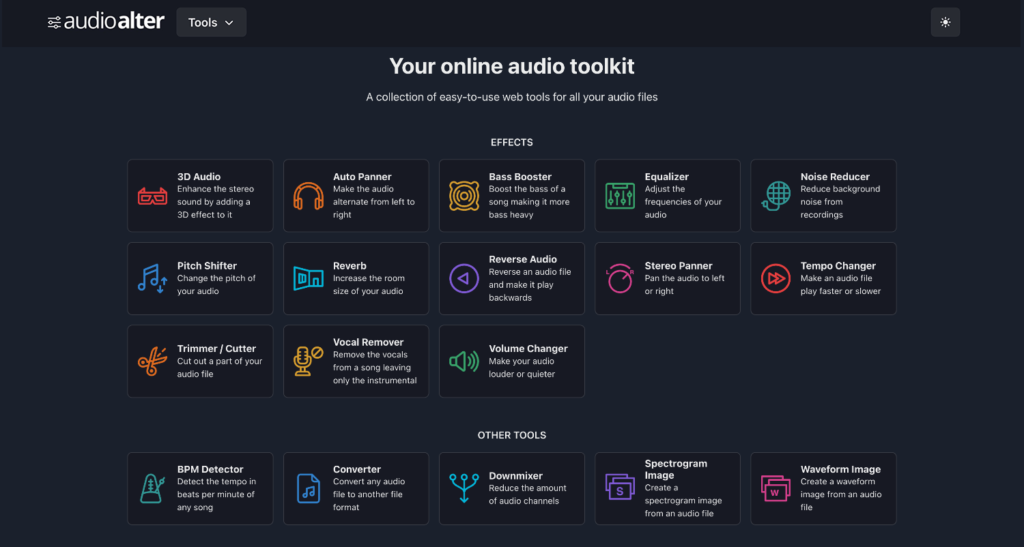
- Audioalter (online audio editor)
- Kapwing
- VEED
- Adobe Podcast (enhance voice)
These tools are fast and beginner-friendly.
Therefore, they are perfect for quick edits.
7. Desktop Software for Audio Editing
Desktop tools offer more control.
In contrast, they require a bit of learning.
Popular Software
- Audacity (free)
- Adobe Audition
- GarageBand (Mac)
If you plan to edit audio regularly, desktop software is a better long-term choice.
8. AI Tools for Audio Alter
AI tools save time.
Moreover, they automate noise removal and voice enhancement.
What AI Can Do
- Remove noise automatically
- Enhance voice clarity
- Normalize volume
However, human judgment is still important for final quality.
How to Start Audio Alter (Beginner Guide)
You do not need professional equipment.
Instead, start with what you have.
Simple Rules
- Record in a quiet room
- Edit basic mistakes
- Apply light noise reduction
- Export in high quality
Consistency matters more than perfection.
Therefore, practice small edits daily.
Common Audio Alter Mistakes to Avoid
- Using too much noise reduction
- Adding loud background music
- Over-editing the voice
- Ignoring volume balance
Because these mistakes reduce quality, keep edits simple.
Final Thoughts
Audio alter helps you create clear, professional sound without expensive gear.
Moreover, small improvements make a big difference in how people experience your content.
There is no single “best” method.
Instead, use simple techniques and stay consistent.
Start small.
Practice regularly.
Let better audio build your confidence.
Frequently Asked Questions About Audio Alter
What does audio alter mean?
Audio alter means editing or changing audio to improve quality, remove noise, adjust volume, or add effects.
Is audio altering difficult for beginners?
No. Basic audio alteration is simple and beginner-friendly with free tools and online editors.
Can I alter audio on my phone?
Yes. Many mobile apps and online tools allow simple audio editing and noise removal.
Does audio alter improve content quality?
Yes. Clear audio improves listener experience and engagement across platforms.
How long does audio editing take?
Basic edits take 5–15 minutes. Advanced edits take longer, depending on project size.